Games for children
Ramadan Games for Kids
Learn about fasting, iftar, Laylat al-Qadr and Eid, one game at a time, from the new moon to Eid.
These are Ramadan games for children aged 5 to 14. Each game teaches a real part of the month, from suhoor and iftar to Laylat al-Qadr, Sadaqat al-Fitr and the Eid prayer, and each has levels for ages 5-7, 8-10 and 11+.
Ramadan is the ninth month of the Islamic calendar, when Muslims fast from dawn to sunset, pray more, read the Quran and give to others. The games show children how the month works and why it matters, following mainstream Sunni teaching and the Hanafi view where the schools differ.
Below you will find what each game teaches, a simple plan for the whole month, practical tips for parents and teachers, and answers to common questions, such as how to explain Ramadan to a child and which Ramadan activities work at home or in class.
Ramadan games to play
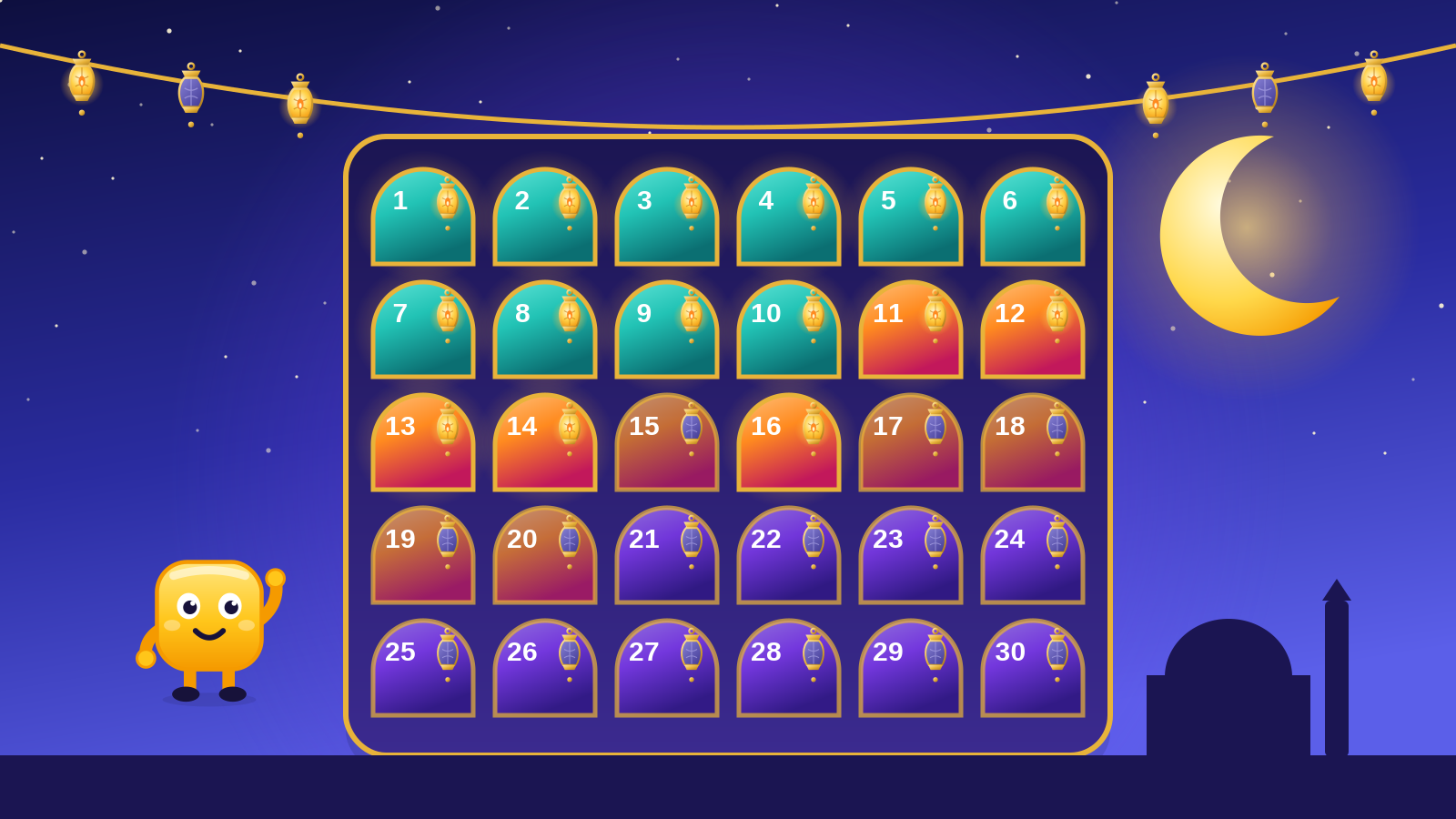
30 Days of Good
An advent-style calendar of 30 doors: behind each one is a small good deed for the day, a short Ramadan fact and a quick question, and every deed done lights a lantern.
Ages 5 to 14
A Day in Ramadan
Children put a fasting day in order from suhoor to Tarawih and sort the rules, such as what breaks the fast and who is excused from fasting.
Ages 5 to 14
Suhoor and Iftar Times
Children read clock faces and an example Ramadan timetable, learn that suhoor is before dawn and iftar at sunset, and older ones work out how long the fast lasts.
Ages 5 to 14
Iftar Share
Children learn the sunnah of breaking the fast with dates and water, share iftar with neighbours and take only what is needed so nothing is wasted.
Ages 5 to 14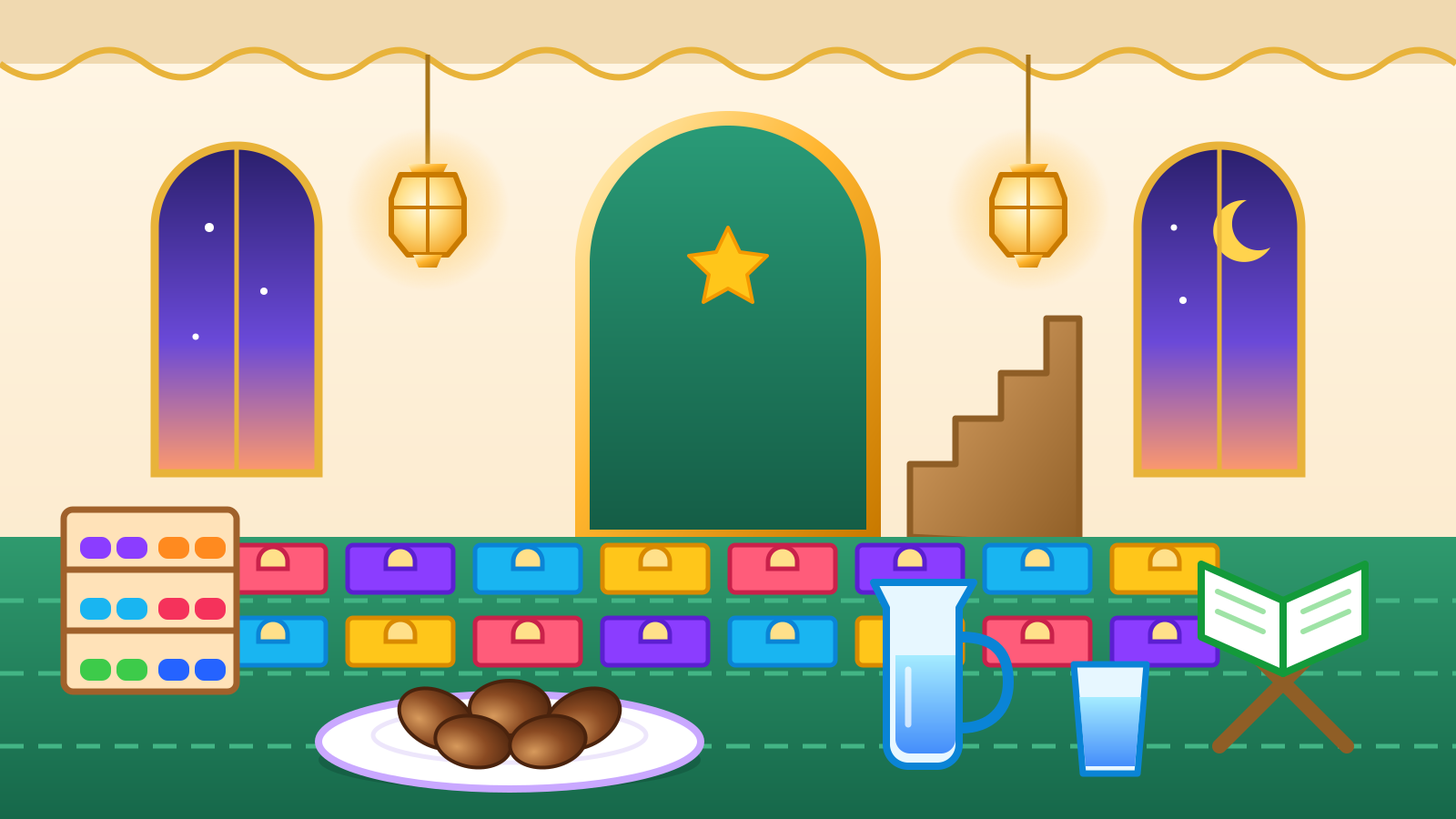
The Masjid in Ramadan
Children learn masjid manners, straight rows, the basics of Tarawih and i'tikaf, and help get the masjid ready for a community iftar.
Ages 5 to 14
Good Deeds Dash
Children learn that fasting also means guarding the tongue and showing good character, and that everyone can do good deeds in Ramadan, fasting or not.
Ages 5 to 14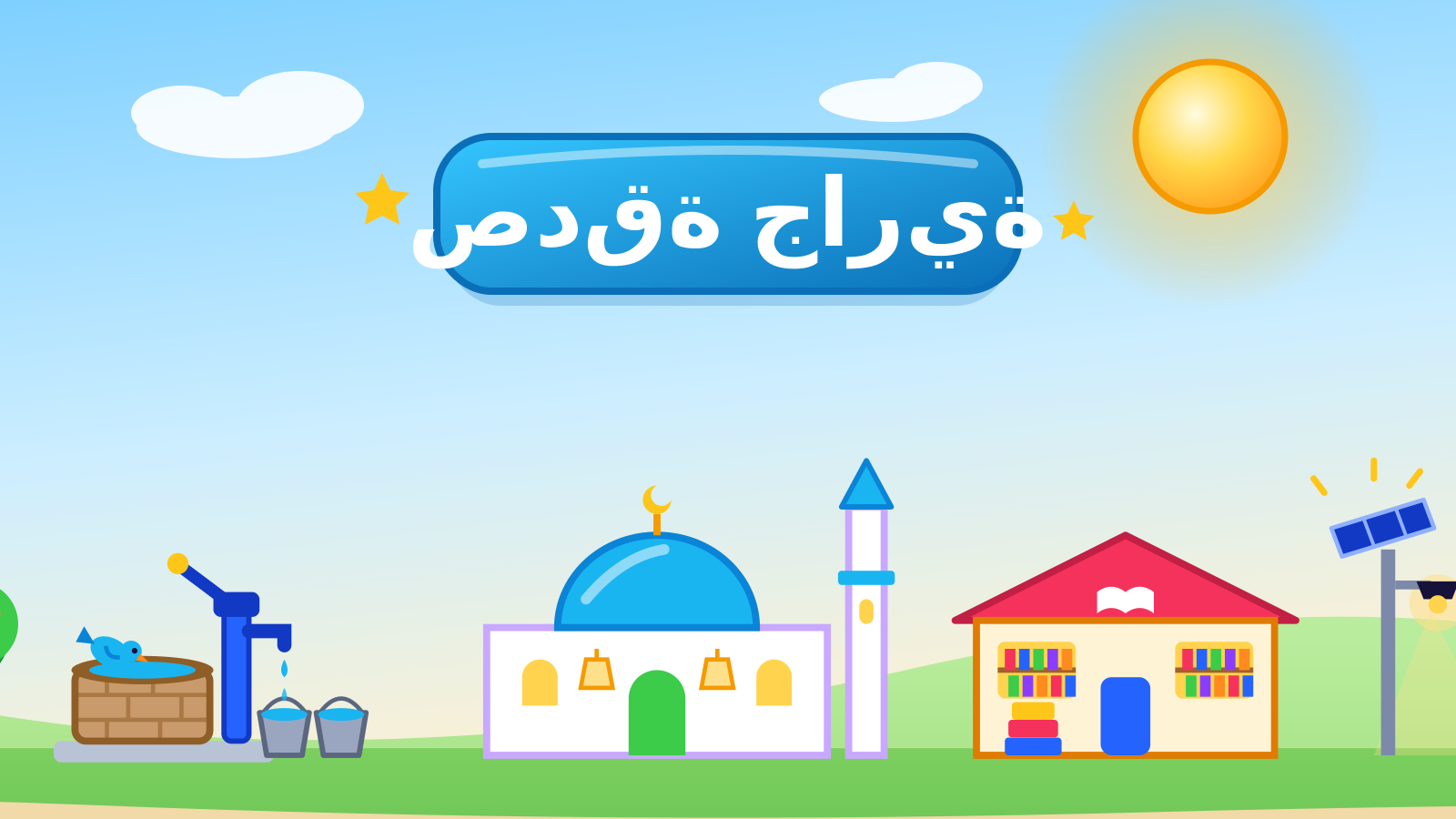
Sadaqah Jariyah Builder
Children learn what ongoing charity means as a village grows with a well, fruit trees, a library and a masjid, and why many charities appeal in Ramadan.
Ages 5 to 14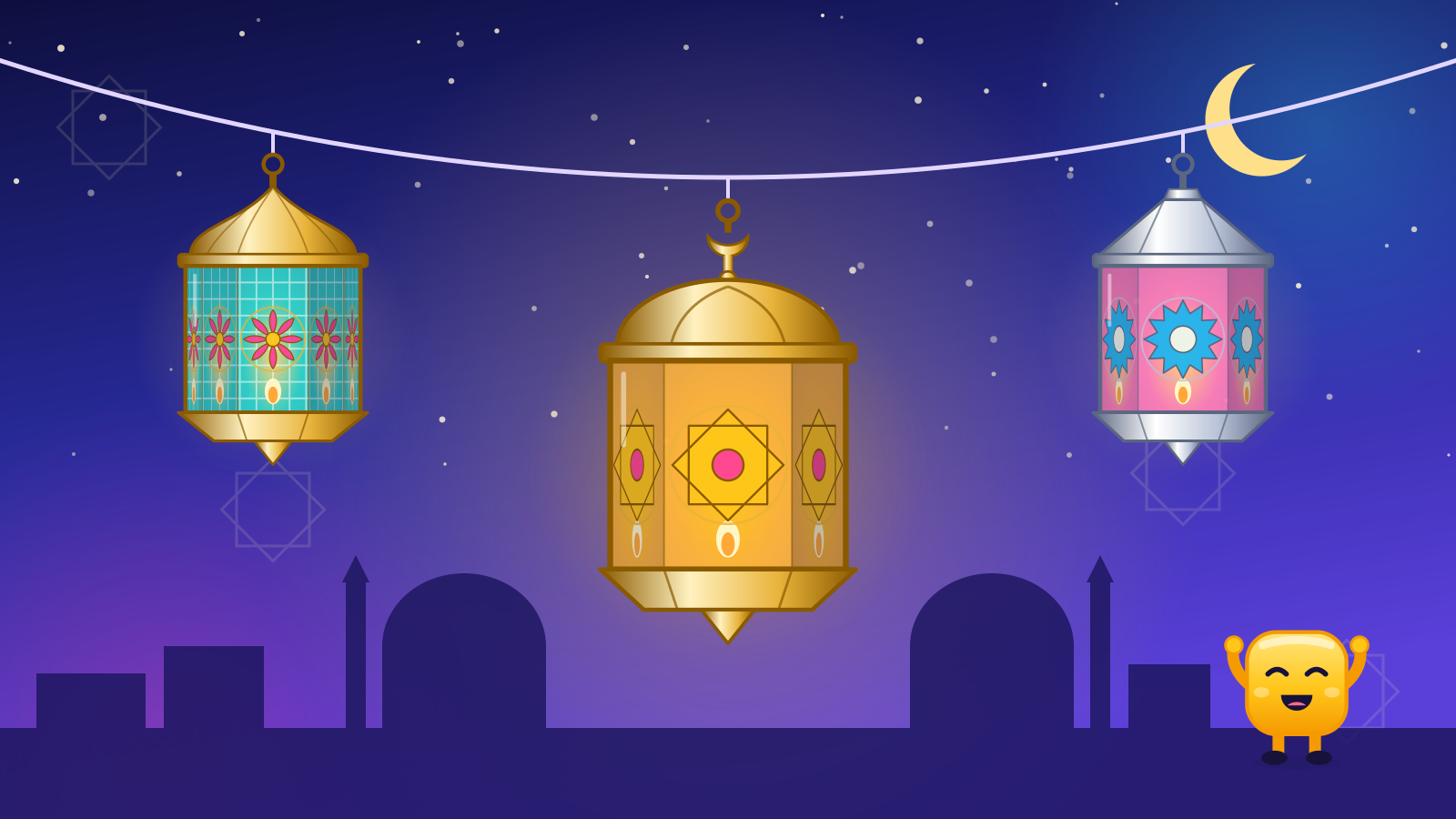
Ramadan Lantern Workshop
Children solve shape, symmetry and angle puzzles and design their own Ramadan lantern with a geometric pattern.
Ages 5 to 14
Lantern Nights
A quiz board of 30 nights on fasting, Tarawih, Laylat al-Qadr and Eid, for one child or two taking turns, with a lantern lit for each right answer.
Ages 5 to 14
Eid al-Fitr Morning
Children learn the sunnahs of Eid morning, the Eid prayer and why Sadaqat al-Fitr is given before it, with counting and multiplying built in.
Ages 5 to 14
Juz Journey
Children walk the 30 ajza of the Quran, learn why Ramadan is the month of the Quran and plan a family khatm with pages per day.
Ages 5 to 14
Hijri Moons
Children see where Ramadan sits among the 12 Hijri months, how each month begins with the new crescent and why Ramadan comes about 11 days earlier each year.
Ages 5 to 14
Charity Champions
Children learn that sadaqah can be a smile or a kind word, the difference between sadaqah and zakah and, at ages 11+, how zakah is worked out.
Ages 5 to 14
My Day of Duas
Children learn everyday duas and their meanings, including what to say before and after eating, which they can use at suhoor and iftar.
Ages 5 to 14
Surah Explorer
Children learn the order of the surahs and what their names mean, a good start for the month in which many families read more Quran.
Ages 5 to 14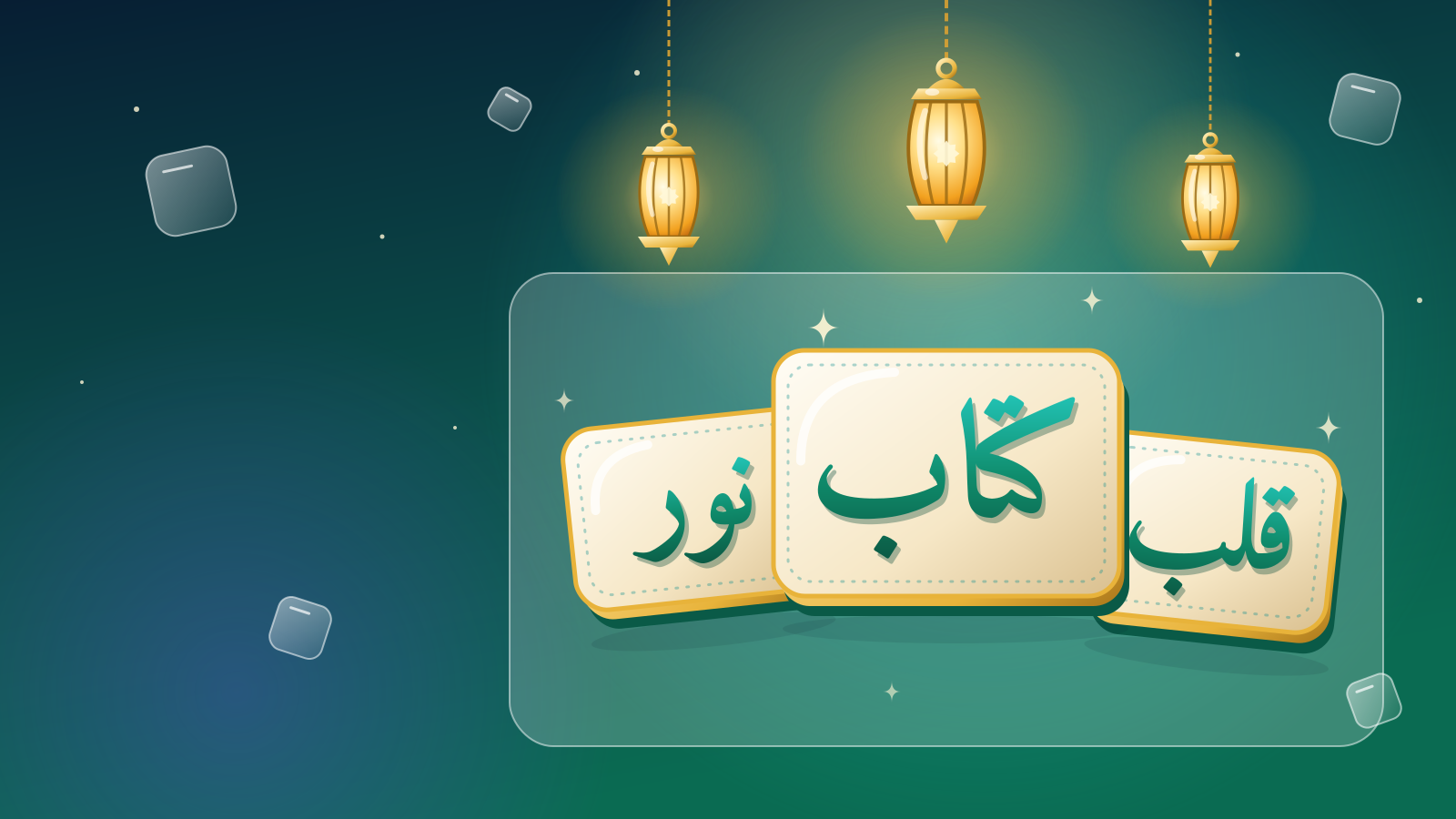
Quran Words
Children learn the meanings of common Quranic words such as nur (light), sabr (patience) and rahmah (mercy), so the Quran they hear in Ramadan makes more sense.
Ages 5 to 14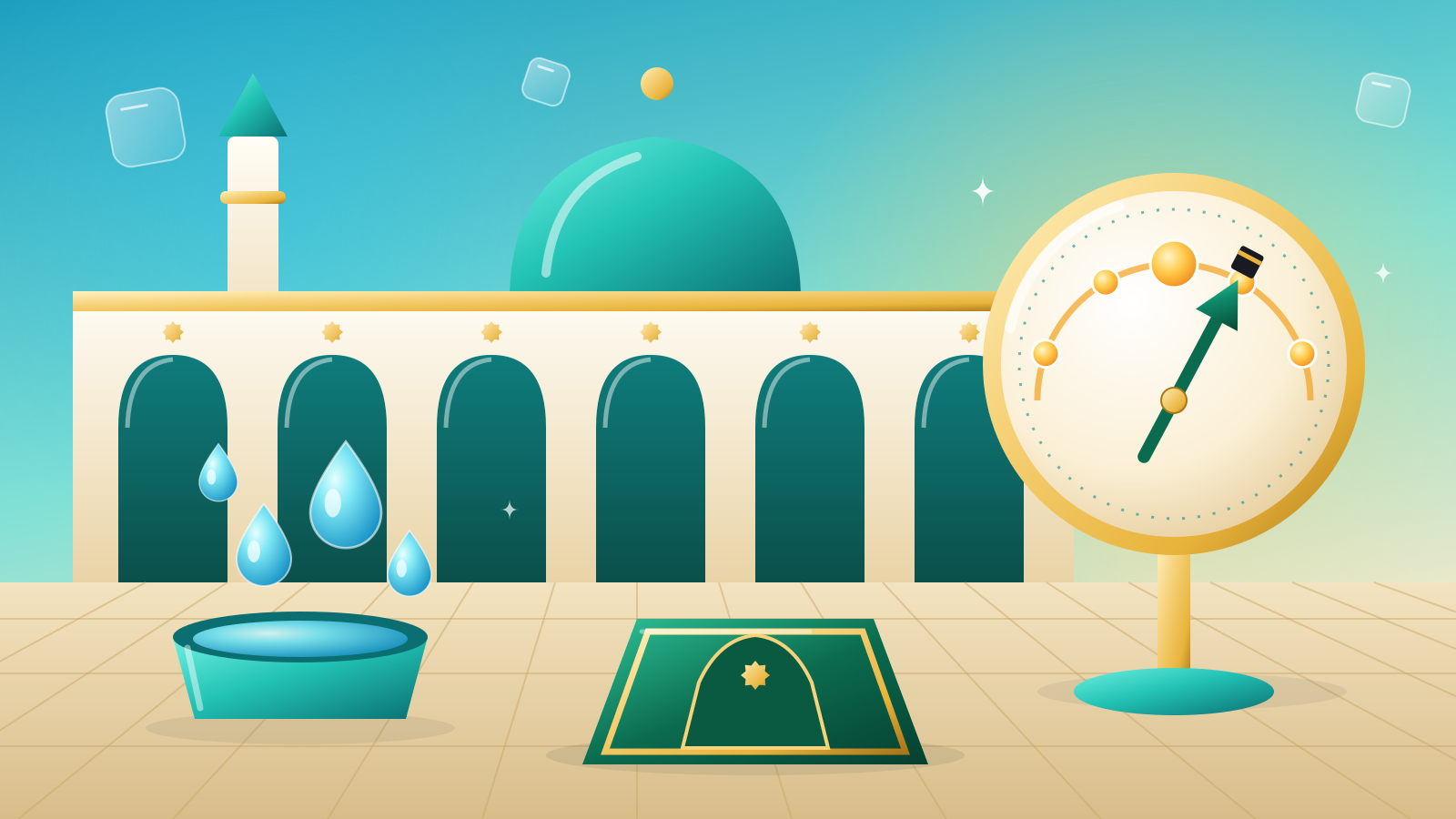
Salah Steps
Children practise wudu and the five daily prayers step by step, ready for a month in which Muslims pray more.
Ages 5 to 14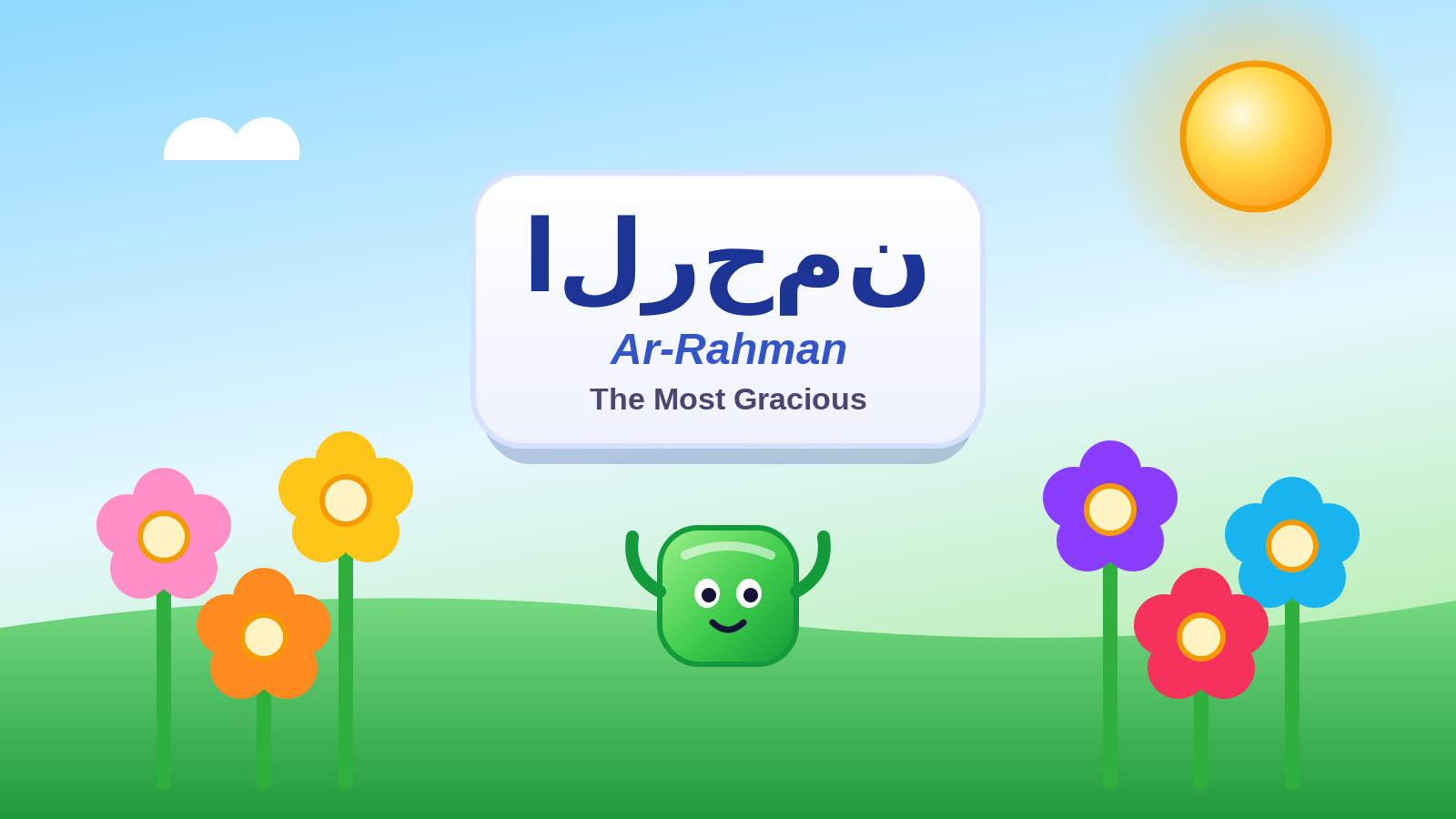
99 Names Garden
Children learn Names of Allah such as the Most Gracious, the Creator and the Provider, with their meanings, as a calm activity for the evenings of Ramadan.
Ages 5 to 14
A month-long Ramadan plan for children
- Before Ramadan
Show children where Ramadan sits in the Islamic year and why it begins with the new moon. Then walk through a fasting day so suhoor and iftar make sense before the month starts. Set up 30 Days of Good together, so children can open one door each day, and make a lantern to welcome the month.
Play: Hijri Moons, 30 Days of Good, Ramadan Lantern Workshop, A Day in Ramadan
- Week 1
Focus on the fasting day and iftar: when the fast begins and ends, who has to fast and breaking it with dates and water. Children can help prepare iftar and learn the duas for eating.
Play: A Day in Ramadan, Iftar Share, My Day of Duas, Suhoor and Iftar Times
- Week 2
Turn to the Quran and prayer: learn some surah names and common Quran words, and practise wudu and salah. A small daily goal, such as one short surah read or heard, is easier to keep than a big one.
Play: Juz Journey, Surah Explorer, Quran Words, Salah Steps, The Masjid in Ramadan
- Week 3
Talk about good character and giving: guarding the tongue, kindness at home and sadaqah. A family charity jar or a good deeds chart works well this week.
Play: Good Deeds Dash, Charity Champions, Sadaqah Jariyah Builder
- Last ten nights
Explain Laylat al-Qadr and why Muslims make extra effort in the last ten nights, especially the odd ones. Short, calm activities suit these evenings, and this is a good time to explain Sadaqat al-Fitr.
Play: Lantern Nights, 99 Names Garden
- Eid
Get ready for Eid al-Fitr together: the sunnahs of the morning, Sadaqat al-Fitr given before the Eid prayer, the prayer itself and visiting family.
Play: Eid al-Fitr Morning
Tips for parents and teachers
Describe Ramadan as a special month of fasting, prayer, Quran and kindness. Talk about what children can do in Ramadan rather than what they cannot.
If a child wants to try fasting, a few hours or part of a day is a gentle start. Praise the effort, and never push a child who is hungry, tired or unwell.
Children can set the table, hand out dates and water or take a plate to a neighbour. Small jobs like these help them feel part of the month.
A paper calendar or a chain of 30 links lets children count down to Eid and mark one good deed each day. One short game, one dua and one kind act a day is easier to keep up than a long session once a week.
In a madrasah or school class, play one game together and talk through the answers as you go. Children who are not fasting, or who are not Muslim, can join in and learn about the month too.
Questions parents and teachers ask
How do I explain Ramadan to a child?
Keep it simple: Ramadan is the ninth month of the Islamic calendar, when Muslims fast from dawn to sunset, pray more, read the Quran and help others. Young children do not have to fast, but they can share in the month by waking for suhoor, helping with iftar and doing good deeds. A Day in Ramadan shows the order of a fasting day in a way young children understand.
#What are good Ramadan activities for kids at home?
Good Ramadan activities at home include helping to prepare iftar, keeping a 30-day good deeds chart, learning a new dua, giving to charity and playing a short Ramadan game each day. A Day in Ramadan, Iftar Share and Lantern Nights each teach a different part of the month, from the fasting day to sharing food and the last ten nights.
#Do children have to fast in Ramadan?
No, fasting becomes obligatory when a child reaches puberty, so younger children do not have to fast. Many families let children practise with part of a day, or a few days, when they are ready, without any pressure. When and how a child starts is a family decision, and for personal situations, such as health, it is best to ask a local scholar.
#When is Ramadan 2027?
Ramadan 2027 is expected to begin around 8 February 2027, depending on the sighting of the new moon, with Eid al-Fitr expected around 9 or 10 March 2027. Islamic months follow the moon, so Ramadan comes about 11 days earlier each year. Your local masjid will confirm the exact dates.
#How can children take part in Ramadan if they are not fasting?
Children who are not fasting can still share in Ramadan by joining suhoor or iftar, helping to prepare food, giving sadaqah, learning duas and doing extra good deeds. Good Deeds Dash reminds young players that they do not have to fast yet, but that everyone can do good deeds in Ramadan.
#What is Laylat al-Qadr?
Laylat al-Qadr, the Night of Decree, is the night the Quran was first sent down, and the Quran describes it as better than a thousand months. Muslims seek it in the last ten nights of Ramadan, especially the odd nights, with extra prayer, Quran reading and dua. Lantern Nights and A Day in Ramadan both teach children about it at the older levels.
#Are these Ramadan games suitable for madrasah or school classes?
Yes. Each game has levels for ages 5-7, 8-10 and 11+, so a teacher can match the level to the class, and Lantern Nights can be played by two players taking turns, which works well for teams. The content follows mainstream Sunni teaching and the Hanafi view where the schools differ, so teachers who follow another school may want to explain any differences.
#Questions, or a game idea?
Tell us what your child, class or community would like to learn next, or point out anything in a game that needs correcting.